
HHGK
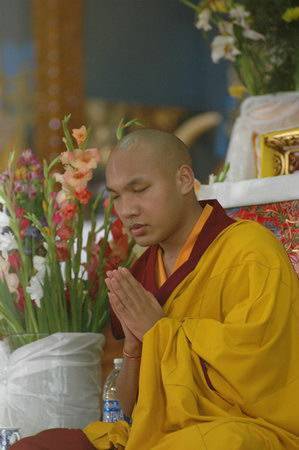
"The world we live in is getting smaller and peoples actions have tremendous impact. In the era in wich we live people cannot get away with cllinging to their beliefs. I dont have any personal attachment or clinging to being a Buddhist. We need to step outside the boundaries of Buddhism and really go out and share the benefits of our Buddhist practise with the rest of the world. " / HHG Karmapa Ogyen Trinley Dorje
Sunday, July 24, 2016

Tuesday, May 3, 2016
The Feminine in Buddhism

Our ideas about what it means to be a woman or a man - that is, our gender constructs - are given meaning and importance in our day-to-day reality. Gender identities permeate so much of our experience that it is easy to forget that they are just ideas - ideas created to categorize human beings. Nevertheless, the categories of masculine and feminine are often treated as if they were eternal truths. But they are not. They have no objective reality. Because gender is a concept, it is a product of our mind - and has no absolute existence that is separate from the mind that conceives of it. Gender categories are not inherently real in and of themselves.
Quote by The 17th Gyalwa Karmapa
Here is a link to a talk I gave on this very subject in the Bikkhuni Monastery Aloka Vihara, in California, April 2016: http://av.dharmaseed.org/teacher/775/
Monday, March 14, 2016
En religiös persons återvändo till det sekulariserade landet

Den fria viljan, som är ett kristet begrepp, och en av våra västerländska värdegrunder, håller vårt sekulära land fånget i friheten. Friheten till tusentals val, som alla fortsätter att leda oss runt i en cirkel utan slut. Var mans rätt..? En fin tanke, men sällan omsatt i handling. Snarare är det så att vi vänder oss om i ord och rörelse efter det som avviker från den rådande normen och vips applicerar etiketten ”ogillande” på det vi upplever som utanför ramarna. Det är ingenting nytt, men heller inget framsteg.
Mönstret just nu utgörs av en mosaik av sekulära idéer, där den frihetslängtande människan hävdar sin individuella rättighet och sina personliga behov av det egna uttrycket med en sån kraft att hon inte längre hör sig själv. Individen har fått en sån kraftfull särställning i navet av vårt samhälle att singelskapet blivit föremål för halvgudsavdyrkan! Medan gemenskap, grupperingar och familj har blivit till ord som skrämmer.
Jag känner inte igen mig.
Varje mobilzoombie och nätverkssurfare vet innerst inne att hen är berövad sin egen individuella frihet och rätt till lycka, var gång hen låter sig berusas av it och mobilbruset utan egen eftertanke. I och med varje upprepat tillfälle som hen villkorslöst accepterar den rådande genomsnittliga strömmen som norm, utan att ifrågasätta eller göra andra val, förblir friheten endast ett gammalmodigt ord i akademins ordlista.
Vid min återvändo till väst lärde jag mig snabbt att det nu mer är en västerländsk sekulariseringslag att aldrig be någon att stänga av mobilen! Man ber folk snällt att sätta på flygplansläge så att dem fortfarande kan känna vibrationerna och ha platsinställningarna navigerade på här och nu, även under meditation. Tillgänglighet 24 timmar om dygnet 365 dagar om året är nu norm. Likväl som att det privata rummet har försvunnit och istället tilldelats rollen som en mytomspunnen idé från det förflutna.
Allt delas i offentligheten.
Var gång jag rör mig genom det moderna väst så upplever jag delvis en stark längtan i andra människors väsen av att höra hemma, att ha en andlig övertygelse och ett liv baserat på sunda värderingar. Likväl finns där skepticism och hån, främlingsförgänglighet och rädsla inför den religiösa ståndpunkten. Tre sekunders möte på en buss, en blick som möter min eller blott synen av nunneklädnaden tycks väcka tusentals åsikter och känslor. Likväl som rädslan och okunskapen finns där även den andra extremen av överdrivna bugningar och dem som kastat sig vid mina fötter…jo, det är sant. Båda extremerna finns, men var är balansen? Hur väljer vi våra förhållningssätt och värdegrunder? Och var hämtar vi vår information ifrån, som vi baserar våra värderingar på?
Det finns en längtan i det sekulära landet efter kärlek, gemenskap och frid. En sann törst efter något vettigt att hålla i i en sjuk värld. Ändå är det få som tar steget mot att ta sin innersta längtan på allvar. Få som blomstrar ut - eller in i sig själva med tillit till en välbeprövad doktrin. Tvärtom vill många plocka russinen ur kakan och baka ihop sin egen söta deg. Sällan leder det till annat än ytterligare en stunds förströelse. Sen är det måndag igen. Dem söndagsreligiösa verkar ha en plats i samhällets periferi, men nåde den som på riktigt anammar sin övertygelses värderingar och omsätter den till verklighet i sin vardag.
Vi har glömt bort hur man umgås utan skärmar. Vi brister i tillit till varandra och sneglar lömskt på allt som sticker ut tills någon vetenskapsman eller webguru helgonförklarar samma fenomen och gör det obönhörligt upphöjt, för en tid.
Vi är förslavade av vårt eget förgiftade begär efter ett allt snabbare skeende och agerar som om vi inte har någon frihet att välja det som gagnar fler än oss själva.
Jag bär på en skatt som få känner till och som jag gärna delar. Men sen jag återvände till det sekulära landet känner jag mig allt som oftast som Milarepa. Han återvände hem efter en tids praktiserande hos sin läromästare för att finna endast benrester och aska kvar av det som en gång var levande och älskat.
Den fjällhöga sekulariserade norden har gått vilse. Och det i ett sånt högt tempo att ingen tycks hitta exit skylten. Ett snurrande hjul mitt i ett brinnande hav av längtan som aldrig tas tid att lyssnas på. Singelkvinnan och singelmannen vars underhållningsvärde sätts i förgrunden och stoltserar med sin tomhet bakom platta skärmar på dating-siter, utgör en del av de upphöjda värderingar som det sekulariserade väst har att erbjuda. Samtidigt är det få som fortfarande minns hur man öppnar en dörr och bjuder på kaffe, kramar om och njuter av hembakade kanelbullar.
Vad har hänt kära gamla fria nord?
Vart är vi på väg när en buddhistnunnas skepnad blir så svår att relatera till, att den antingen möts med förakt, men mestadels med total ignorans och i bästa fall som en trofé eller fjäder i hatten, men sällan för vad den är; en symbol för möjligheten att gå mot frihet.
Friday, January 8, 2016
Bhusanam video release
https://youtu.be/b196iEjGBDk
 Artist:Chimey Lhatso
Track:Bhusanam
Music composed and produced by Chimey Lhatso
Album:Mothers & Strangers
Year: 2016
Video directed, shot & edited by: Lars Bethke, Bethke Production
More: www.cooia.org - Celestial Ocean of Immortal Activity
Hastasya phushanam danam
satyam kanthasya phushanam
shrotrasya phushanam shastram
phusanaih kim prayodjanam
”Generosity is the ornament of the hand. Truth is the ornament of the throat. Scripture is the ornament of the ear. What is the use of other ornaments?”

Track:Bhusanam
Music composed and produced by Chimey Lhatso
Album:Mothers & Strangers
Year: 2016
Video directed, shot & edited by: Lars Bethke, Bethke Production
More: www.cooia.org - Celestial Ocean of Immortal Activity
Hastasya phushanam danam
satyam kanthasya phushanam
shrotrasya phushanam shastram
phusanaih kim prayodjanam
”Generosity is the ornament of the hand. Truth is the ornament of the throat. Scripture is the ornament of the ear. What is the use of other ornaments?”
Thursday, December 24, 2015
The challenges with bringing dharma to the west

The following text is derived from a speech that I was asked to give, during the past summers historical inauguration of a traditional Tibetan Buddhist Temple, built on Scandinavian soil. The theme was "The challenges with bringing dharma to the west." I spoke for 20 minutes, and as my speech came to an end, and I returned to my seat, there was a massive positive response of applauds and thank yous. This is what I said:
"As a Buddhist monastic, in the Karma Kagyu lineage, as well as being someone who shares the dharma with others, I often struggle with the question of how to balance respect for tradition, while adopting the dharma in to new cultural territory.
From a western Buddhist nuns perspective being an island as to one self is many times a living fact rather then an active choice. We are often deprived from the context of a sangha, both monastic and lay, and therefor I can only speak from my own point of view, taking in consideration, the challenges among the several groups I have the good fortune to meet and teach on a regular basis.
In the old days nuns and monks were embraced in to a monastic environment, with access to a temple, to teachers and education, as they took they're vows, and thereby entered the monastic Sangha. That is not the common case of today. At least not for us westerners. We are many times on our own with a lack of support, home base and monastic sangha. In most cases no education is given to us, unless we find a way to finance our own education. Furthermore we have to find our own ways to sustain our selves, and make sure we have the finances to keep us going - just like any lay practioner.
After some years of studying, receiving empowerments and being close to the masters in India and Nepal, in particular my main Lama, the Gyalwa Karmapa, I came back to the west. First I came to live at Karma Triyana Dharma Chakra, the Gyalwa Karma's main seat in the US, where I stayed as the assistant shrine keeper.
On the invitation from a dharma organization in Sweden I then accepted they're request to come and live there as they're teacher in residence.
For the last two years that I have been back in the west, living with and sharing the dharma with several Buddhist groups, in the US as well as in Sweden, it has been an ongoing investigation in how to apply and live the dharma in the most beneficial way. My regular activities has so far mainly been as the resident teacher of a Buddhist study group in Sweden, besides my role as the assistant shrine keeper at KTD. Most residents at KTD are laypeople with a variety of visions of what KTD is and as of now its mainly run as a retreat center for laypeople, while upholding the Gyalwa Karma's main seat in America to the utmost of ones abilities. While the non-profit Buddhist organizations in Scandinavia, to my experience, like so many other dharma groups in the west, display divided groups within the organizations, when it comes to practice preferences and visions, as well as how to organize them selves. The groups tends to base they're decisions on single opinions, rather then democratic values and show a lack of agreed guidelines. With many different teachers, from several lineages and traditions coming through and giving different advices, this in reality all together creates a fertile field for confusion to arise. Only 2 of the 5 groups that I'm regularly visiting have they're own facilities.
From my side its still - good to be back home.
Because seeking out the genuine living Buddha Dharma in the East, on the other hand, we many times find our selves in environments that are providing a reality of shelter and food that are challenging our possibilities to stay healthy. Despite the facts of immune and digestive systems becoming more vulnerable when traveling abroad, we do need the closeness it gives us to the living dharma, the masters and the pilgrimage sites, as for all students of the Buddha dharma. Cultural differences are inevitable and the gap to be bridged over, between westerners and easterners frame of mind, also needs to be taken in to consideration.
We take ordination for life just to discover that the social context in which to grow and learn from are deprived from us. So we become individual satellites floating around in the world of Buddhism with our twinkling search lights. Its a very lonely position. Most of us doesn't last very long. During my first year as a nun more then 8 western monastics in my immediate surroundings disrobed. That was very discouraging.
With the lack of a supportive environment to uphold Shakyamuni Buddhas teachings in the West, its hard to imagine how is it going to be done, and by whom? The new temple in Norway is an inspiring example of the Buddhas way in Scandinavia, and its so needed in order for the Dharma to stay available and be upheld. Best case scenario monastics and lay dharma practitioners are setting examples of spiritual discipline and acting as inspiration to others, which is the foundational prerequisite for the Buddha Dharma to stay alive. Secondly we are all looking forward to see the emerging of several temples, stupas and Buddhist resting places for the deceased in Scandinavia. So that we, just like our Christian, Muslim and Jewish brothers and sisters can enjoy the opportunity to practice in a traditional way within our own belief system.
In my current situation I have been providing dharma discussions on different topics on a regular basis, and this has shown to be very meaningful for many participants. I'm also giving Shamatha meditation instructions and conducting retreats on themes such as Inner Stillness, Self Compassion and The four foundations of Mindfulness, based on the Satipattanna Sutra. All of these topics find a large number of interested participants. Most of my activities are facilitated by an external organizer, such as a dharma center. What topic to be taught is often based on they're needs and my suggestions. As I'm not a master of the Buddha Dharma, I have limited the availability of different topics, based on advice from the Gyalwa Karma and my branch teachers. This seems to be working very well.
Even though I have had a very fortunate situation coming back to the west, with many generous persons around me, and people being thirsty for the dharma, it has long been a contradictory situation for many western monastics to take robes in a situation where we on one hand have not been fully supported, and on the other hand are not encouraged to take an employment and keep a household. So then how is a westerner in robes supposed to survive and develop? With a sincere aspiration to give your life to the Buddha Dharma but finding a lack of social context, appropriate education and so forth, we are more or less forced to become estranged by our own as well as Eastern societies, and that's not a very sustainable situation.
Few individuals, both men and women, has stubbornly succeeded to keep them selves for decades on this lonely path to enlightenment. Those are the handful of inspiring living legends that we admire today, but whose lives hardly can stand as role models, as they're exceptions to the commonality.
Those of us who are interested in philosophical studies usually struggle to get an education, and end up financing it our selves. If we can. Some occasionally do take temporary employments back home in the West to fill up the emptying bank account, and a very few fortunate once has financial support from Buddhist lay people, but usually only for some limited time. Most western nuns Ive met end up staying in separate apartments and laypeople houses, and pay for they're own lodging, travels and food. They might never have had the good fortune to live with other nuns or in a monastic environment, nor been given any formal training. Many give up after 3 years or so...
Those who find the opportunity to commit them selves to a monastery or dharma center soon become aware of the tendency for those institutions to be fertile grounds for power struggles. For a anyone to start a dharma center there will be a need to come together with others who are ready to take on the responsibility that comes hand in hand with such an undertaking.
When creating monasteries and dharma centers that involves monastic presence, the main responsibility of carrying for worldly concerns, should in an ideal world, be in the hands of the lay practitioners, not the monastics. While the Abbots and spiritual directors as well as the dharma teachers should mainly be monastics. For us to be able to uphold the Vinaya and Pratimoksha rules in our day and age, we need a collaboration with the lay sangha as in the traditional way.The Vinaya principle and the continuity of the original tradition needs to be followed as much as we can, as its a path proven to re-ignite our inherent recognition of our true nature. Here we find the importance of the virtuous collaboration of the four pillars of monks, nuns, lay women and men by staying true to these 2600 years of vintage ideas.
On the other hand we many time ripen a bitter practice when becoming to tight around the principals of training that the Buddha laid down in the Vinaya. A tendency that is especially strong among us westerners, as this life style is something we seldom grow up with, and therefor not always fall in to so naturally. As nuns we are furthermore being expected to be the second class citizens in the Monastic world, so it seems as we easily fall in to the "good girl trap," trying to prove our selves as a worthy existence in this medieval system.
What the Vinaya is concerned, its about how to live a healthy life all together. Its an extended form of yogic life, not a book of hardcore rules that you will be punished for when not following them exquisitely. Punishment and original sin doesn't exist in Buddhism, as you know - and this is another cultural challenge of bringing the dharma to the west, as most of us has grown up with a value system based on the Christian faith, weather we have been confirming ourselves to Christianity as a religion or not. So hitting our selves on the head when we fail to be perfect picture book nuns or perfect picture book dharma practitioners wont help anyone. We need to have the courage to apply radical acceptance of our shared humanity, and remember that our true inherent nature is good, pure and awake. Because of this ingrained ignorance it is useful with some guidelines, such as the Vinaya, without becoming to rigid about the whole idea.
For us westerners there is very seldom any Monasteries or Nunneries to turn to. Especially as nuns we are kind of left in the gutter. But there is light in the end of the tunnel. During this years past Arya Kshema in Bodhgaya, the Gyalwang Karmapa made the historical announcement that, beginning next year, he will take steps towards restoring nuns’ vows in the Tibetan Buddhist tradition. Furthermore, inviting the Dharmagupta nuns, who hold bhikshuni ordination, to confer the first two levels of vows to a limited number of nuns in the Tibetan tradition will ensure that their novice and training ordinations are conducted in a proper and complete ceremony from an unbroken lineage. These novice and training vows may then form the basis for future full ordination for all women in the Tibetan tradition. So these are incredible news from the Gyalwa Karmapa planting the seeds for us to gain access to an increasing number of female teachers in the future, and so create a basis for gender equality in our global dharma community.
There are certain things that can only be upheld within a monastic tradition, and others where there is not much difference between lay practioners and monastics. We need to see these differences, and draw the strength from both, as we are creating a living support for the four pillars of monks, nuns, men and women, to come alive in the west. We need to come together around this and uphold a living network among us Scandinavian dharma practioners, in order to create a sustainable growth for the Buddhas teachings on our soil. In our tradition things has slightly degenerated trying to fit the pure learned lifestyle of the monastics with a life of rock stars on motorbikes as well as an unsupported plain laylifestyle…On the other hand, standing to much outside of modern day society and holding to tight to traditional ways, will not be helpful either, as how to integrate Buddhism in our time and part of the world.
But where do we find the motivation today, to uphold the Buddhas teachings, in a society that are filled with values and ways of life that not always are so helpful...How do we go from a place of encouraged self indulgence to a shared space of basic sanity?
The process of investigation is an indispensable part of our progression towards a more awakened, compassionate, and wiser state of being. Many Western Buddhists come from a perspective that is highly suspicious of orthodoxy and religion. This can also be a strength when approaching the Buddha Dharma. As many of our Masters are emphasizing the foundation of studying the Buddhist teachings based not on faith alone, but also on rigorous investigation, just like a merchant of gold who buys the gold only after thorough analysis of its purity.
Buddhism appeals to this rationality by challenging ingrained ideas about suffering, happiness, and the nature of reality, but when we study with traditionally trained Tibetan Masters, we often find that the teachings are intertwined with cultural assumptions that do not fit neatly with a strictly rational perspective and other western oriented perspectives such as me myself and I before community building and a healthy stand in the power of us, we and ours. Applying rigorous inquiry to traditional Buddhist teachings is more delicate than it might appear. A case in point is when we meet the traditional teachings on guru devotion, or reliance on a spiritual friend.
As the number of non-Asians studying and practicing Buddhism has increased, let alone in Sweden there are now 30 000 registered Buddhists as of today. Even though we can see that this number also is due to Asian immigrants, there is a growing interest for Buddhism among the general public, Especially through popularization of Buddhist philosophy and core values, such as the seventh branch of the Noble eightfold path, namely Mindfulness, as well as many Psychologists turning to Buddhism to find sustainable ways of carrying for our mental health.This has also led to an increase in confusion that may arise when students don't know the broader perspective of the Buddhas wisdom teachings, nor how to develop a healthy approach to they're Lama and monastic sangha. Students may be enchanted by the exotic aura that often surrounds Tibetan Lamas, and we may not have the emotional or spiritual maturity to distinguish healthy behavior from unhealthy patterns of emotional dependence. While such patterns are often related to students’ psychological backgrounds, they may also be due to teachers’ lack of bridging the dharma from one culture to another. Western students may be seeking a “quick fix” to their problems or a transcendental experience, which may unconsciously manifest as excessive devotion to their teacher without a careful examination of the teachings or the teacher. Or by turning to Mindfulness in the same way you would go to the Gym for an hour. So in order to avoid falling into this type of cultural clash situations and lack of knowledge, and thereby potentially being watering down the dharma, it is crucial for both teachers and students to carefully investigate with whom we form spiritual relationships and what to adopt and how to adopt the teachings when integrating the dharma on western soil.
As an example, the term ”mugu” or “devotion,” especially ”guru devotion” can evoke very strong feelings. A“guru” is generally imagined as a mystical figure with esoteric knowledge who gathers eager disciples who often idealize him or her in cult-like devotion. In the Buddhist teachings, however, a real guru, holds a pure linage and possesses an abundance of good qualities, such as ethical discipline, wisdom, compassion, and patience. Although we might not necessarily see all these qualities in they're perfection in every teacher we meet, due to the degenerate times we are in, as well as due to our own karmic dispositions of meeting a qualified teacher in the first place, we need to find away to cultivate trust through investigation. When I meet this kind of strong feelings around the word ”Guru” I prefer to use other terms such as spiritual friend or simply teacher or guide, to create an accessible bridge in relation to our own cultural way of relating in a healthy way to a Kalianamittra or Spiritual friend. Therefore, it is best to try to express and resolve our doubts and concerns, if not directly with our teachers, at least with more experienced students then ourselves, whom we trust in these matters. And as senior practitioners make them selves more available to new comers questions and doubts a big portion of this kind of confusion will be resolved. Without a sense of mutual responsibility, care and skillful communication, as well as mutual trust and a common vision, we wont be able to firmly root the Buddha dharma in the west. Naturally, we need to do this transition in as a skillful way as possible, being aware that cultural and linguistic differences may also play a significant role in our misunderstandings and confusion.
The dharma has jet to be carefully nurtured in Scandinavia in order to grow in to a steady and rooted tradition in our cultures. In the 70s and 80s there was a larger number of Swedes who engaged in the dharma on a deeper level then there is currently. As for the last 30 decades the Dharma has almost fallen in to a sleeping beauty state in Sweden, until recently. So I'm so happy to see that there seems to be a re-emerging from this sleepy state, and am grateful to all of you in Norway for not giving up and to manage to build such a fine temple on Scandinavian soil, as you have. If it wasn't for a few torch bearers like your selves, that has kept the light burning, this part of the world would have been an even darker place then it already is.
I feel honored to have discovered some of the precious dharma jewels of Scandinavia, and to touch base with the pathways that already has been created. I feel humble before the possible prospect to follow in the footsteps of such pragmatic and fearless heroines and heroes. My heart is pounding in order to bridge an ocean of dharma activities in to the open fields of these native grounds of ours, be part of, and welcoming a continuous blossoming for the Scandinavian Buddha Dharma.
Thank you!"
Tuesday, February 3, 2015
Up to the surface or down deeper below...

There was an obvious fork in the road. What looked like it could have been the last journey, turned out to be a new beginning. Despite the hardships of staying down under and keep swimming against the tide, strength and inspiration was restored by merging forces with the genuine masters. So many rare pearls miraculously appeared in my hand and was fully recieved. So many merky clouds of doubt washed away by clarity.
Theyre not letting me go, instead Im pulled under, and loving it.
Continuing this magical journey of no-self discovery. Diving deeper in to the depths, instead of floating back to the polished surface. Reflecting and being reflected. Joyous and frightened. Relieved and heroic. Strengthened and furious. Leaving all compromises a side. Acomodating the sceptics no more. Stepping in further - full on. Both duckfeet in the water. Allowing the wetness to be. No more learning to swim, just giving up in to the glorious ocean of wisdom, in union with a softened heart. The surface more distant then ever. Happy New Year!
Sunday, February 9, 2014
Meeting with a Dharmic Heroine

She is one of those who greeted great Lamas upon arrival, made sure they had a place to stay and also planned ahead and organized for theyre longed for arrivals. She sat with the 16th Gyalwa Karmapa as he performed the black crown ceremony in Stockholm, for the first time during his era. She was also one of the first in this country to meet His Eminence Kalu Rinpoche in his previous incarnation, and so enjoy the nectar of dharma flowing from these prominent masters in our native country. She is one of the key holders to have opened the door for the dharma to flourish in Sweden. Emaho!
Her depth, wittiness and sensitivity touched my heart. It was a joy and a true honor to make this connection. She is now 90 + and stays in bed most of the time, and with the earth as her witness she is living a life full to the brim of spirituality.
Meanwhile, the Dharma has almost fallen in to a sleeping beauty state for decades now in Scandinavia. If it wasnt for a few torch bearers that has kept the light burning this would be an even darker place then it already is. Once upon a time there was even a classical three year retreat held in Sweden. The few Swedish Lamas and senior dharma practitioners that are still around has scattered in to the shadows since long. One here. Two there. But the light I had the good fortune to receive through her clear blue eyes along with the connection that was made was sincere and delightful and full of strength. An important meeting between two different dharma generations has occurred.
I feel honored to have discovered some of the precious dharma jewels of Sweden, and to touch base with the pathways that they have already created. I feel humble before the possible prospect to follow in the footsteps of such pragmatic and fearless heroines and heroes. I bow down to the fact that decades of mouldered leaves cant hide the dharmic roots that once were planted in this northern mother soil, and I fold my hands with bursting joy for the sprouting new dharma buds that long to break free and embrace the whole space with theyre fresh petals. My heart is pounding in order to bridge an ocean of dharma activities in to the open fields of these native grounds and welcome a new spring for the Swedish Buddha Dharma.
Friends of all creeds and casts, when the women are on the move, no one can stop them!
Monday, September 23, 2013

The Bus Society
The life with a sangha as I see it, is to expand the mind from its most cloistered corners, and get all of once juicy differences and crisp angels mirrored back by others, without away to retaliate. It is about practicing choicelessness.
A sangha consists of a group of potential friends, enemies and those that one feels indifferent for. Just as anywhere. Like on a bus.
Thats why I call this "The Bus Society".
One is living very close together in a small container, full time, where there is no choices around meeting someone or not. What ever and who ever is right there in your face, weather you like it or not, around the clock. One might resist it at first, but eventually its gonna start seeping in and start dancing on your lack of patience, like a laughing skeleton. There is no way but to surrender to the rawness of it all. Once own shortcomings become very vividly alive and mirrored back in full color when living in community.
This is how we learn from each other.
People of all sorts and walks of life may constitute a sangha, and finding deeper relationships within a community is quite unusual, no matter where you are. Its not like calling all your best friends together and say; Hey, lets go live together. Its more like you would step in to any city bus, preferably one youve never been on before and suggest the same thing; Hey, lets go live together!
There is the guy you would never have thought of even have a cup of tea with who now shares your seat, the woman whos core values are so the opposite to yours that a mere Halo at the breakfast table makes you long for a turtle shell to crawl in to. There is those who tickles your curiosity who never looks in your direction, and those you are to afraid of to talk to. Small, big, with tattoos, and without, but everyone has scares. They come in all colors and sizes, and they are not getting off at the next stop...
You share your bathroom, your few toys and goodies, your good moods and your worst moments with these fellow companions of the bus society 24/7.
Youre up close with your most hidden secrets, your failures, strengths and shortcomings. The longer you stay the longer you get a chance to be boiled thoroughly, and get your edges softened. Emerging from the sangha soup as a tender and tasty potato or carrot might take a while though. Most of us are hard boiled eggs all ready that instead needs to be cracked open. O´boy, hope no one needs to be cracked open! Just softly boiled to perfect tenderness. ;-)
I see part of sangha life as an investment in the living Dharma, for the sake of all living beings. The insights we get through abandoning our comfort zones and stirring right at the edges of our limited worlds is what invites us to expand and soften in to a more peaceful and harmonious frame of mind. Unless you push it to far to fast...and starts to sink instead.
Many ideas of what it might be to live in community and in a monastery or nunnery fall apart when you enter one and become a part of it.
Thats a good thing, because it opens up the potential to see what it really is, and what is really true and what needs to be addressed. What it really means to be living in community wont be limited to our own approval, it will just show it self on our doorstep as it is, and we take it from there to the cushion. Bringing what ever ripens to the path and use it as potential fertilizers to our capacity to grow beyond our current limitations.
Its hard work to get the bus society rolling harmoniously, as most of us just want to come to gorgeously ready served tables and not get our sleeves soiled or stained by uncomfortable truths. Especially not about ourselves.
The strength of being more then one that together digs in to create the sustainable foundations for a continuation of stable sangha lives are needed.
We are much stronger together then alone, and we will continue to need each other in order to anchor a foundation for sangha life that can mirror back our own uncomfortable truths, and befriend them, for the sake of all beings.
The life with a sangha as I see it, is to expand the mind from its most cloistered corners, and get all of once juicy differences and crisp angels mirrored back by others, without away to retaliate. It is about practicing choicelessness.
A sangha consists of a group of potential friends, enemies and those that one feels indifferent for. Just as anywhere. Like on a bus.
Thats why I call this "The Bus Society".
One is living very close together in a small container, full time, where there is no choices around meeting someone or not. What ever and who ever is right there in your face, weather you like it or not, around the clock. One might resist it at first, but eventually its gonna start seeping in and start dancing on your lack of patience, like a laughing skeleton. There is no way but to surrender to the rawness of it all. Once own shortcomings become very vividly alive and mirrored back in full color when living in community.
This is how we learn from each other.
People of all sorts and walks of life may constitute a sangha, and finding deeper relationships within a community is quite unusual, no matter where you are. Its not like calling all your best friends together and say; Hey, lets go live together. Its more like you would step in to any city bus, preferably one youve never been on before and suggest the same thing; Hey, lets go live together!
There is the guy you would never have thought of even have a cup of tea with who now shares your seat, the woman whos core values are so the opposite to yours that a mere Halo at the breakfast table makes you long for a turtle shell to crawl in to. There is those who tickles your curiosity who never looks in your direction, and those you are to afraid of to talk to. Small, big, with tattoos, and without, but everyone has scares. They come in all colors and sizes, and they are not getting off at the next stop...
You share your bathroom, your few toys and goodies, your good moods and your worst moments with these fellow companions of the bus society 24/7.
Youre up close with your most hidden secrets, your failures, strengths and shortcomings. The longer you stay the longer you get a chance to be boiled thoroughly, and get your edges softened. Emerging from the sangha soup as a tender and tasty potato or carrot might take a while though. Most of us are hard boiled eggs all ready that instead needs to be cracked open. O´boy, hope no one needs to be cracked open! Just softly boiled to perfect tenderness. ;-)
I see part of sangha life as an investment in the living Dharma, for the sake of all living beings. The insights we get through abandoning our comfort zones and stirring right at the edges of our limited worlds is what invites us to expand and soften in to a more peaceful and harmonious frame of mind. Unless you push it to far to fast...and starts to sink instead.
Many ideas of what it might be to live in community and in a monastery or nunnery fall apart when you enter one and become a part of it.
Thats a good thing, because it opens up the potential to see what it really is, and what is really true and what needs to be addressed. What it really means to be living in community wont be limited to our own approval, it will just show it self on our doorstep as it is, and we take it from there to the cushion. Bringing what ever ripens to the path and use it as potential fertilizers to our capacity to grow beyond our current limitations.
Its hard work to get the bus society rolling harmoniously, as most of us just want to come to gorgeously ready served tables and not get our sleeves soiled or stained by uncomfortable truths. Especially not about ourselves.
The strength of being more then one that together digs in to create the sustainable foundations for a continuation of stable sangha lives are needed.
We are much stronger together then alone, and we will continue to need each other in order to anchor a foundation for sangha life that can mirror back our own uncomfortable truths, and befriend them, for the sake of all beings.
All of us who are willing to walk the path are all channels for the Dharma, no matter shape or form, and the way the way will show it self is through walking it - step by step towards selflessness.
"The Charnel Ground" - composed in Bodhgaya January 2009
Im walking the charnel ground.
Theres a shuffle by the tree.
I am this moment.
How can you be in love with a moment?
Now Im here.
Now Im gone.
Im the place between breathing in
and breathing out.
Now Im here.
Now Im gone.
Im the space embracing the leave.
The leave will drop,
fall to the ground
and follow the wind.
I am the leave.
Now Im here.
Now Im gone.
I am walking the charnel ground.
There is a shuffle by the tree.
"The Charnel Ground" - composed in Bodhgaya January 2009
Im walking the charnel ground.
Theres a shuffle by the tree.
I am this moment.
How can you be in love with a moment?
Now Im here.
Now Im gone.
Im the place between breathing in
and breathing out.
Now Im here.
Now Im gone.
Im the space embracing the leave.
The leave will drop,
fall to the ground
and follow the wind.
I am the leave.
Now Im here.
Now Im gone.
I am walking the charnel ground.
There is a shuffle by the tree.
Monday, May 27, 2013
This Isolated Position

Being an Island as to one self is not a chosen position in this form, but a living fact for many of us western nuns in the Buddhist Vajrayana tradition.
In the old days nuns and monks were embraced in to a Monastic environment as they took theyre vows, and thereby entered the Sangha. That is not the case of today. At least not for us westerners. Were on our own. No support, no home base, and in most cases no education is given to us either, unless we pay for it. We have to find our own ways to sustain our selves, and make sure we have the finances to keep us going.
Seeking out the genuine living Buddha Dharma we many times find our selves in environments and cultures that are foreign to us. Environments that are providing a reality of shelter and food that are challenging our possibilities to stay healthy. Despite the facts of immune and digestive systems braking down when traveling abroad, we need the closeness it gives us to the living dharma, the masters and the pilgrimage sites. Cultural differences are inevitable and the gap to be bridged over, between western and eastern monastics frame of mind, needs to be taken in to consideration.
Youre old world is gone and there is no new world to enter.
Many of our family members and old friends rejects us, or feel alienated to our new world. Even with the best of intentions and most sincere efforts to adopt a compassionate heart from our side, especially towards those who misunderstand us or carry prejudice about our choice of life, we meet many challenges with our old relations and some closed doors. From our side its a path of no return once you've seen the futility's of Samsara. Then its even harder, not to say impossible to stay satisfied in the loop of the projected dream world. It becomes like a mutual vomiting. The worldly world spits you out, while the created self cracks open, and sheds its old engagement in the worldly concerns. Yes, we are abandoning a wrecked ship, and with us we carry the wish to rescue everyone, including our selves, who is also about to drown in the stormy waves of birth, sickness, old age and death.
No turning back. No where to go.
We take ordination for life just to discover that the social context in which to grow and learn from are deprived from us. So we become individual satellites floating around in the world of Buddhism with our twinkling search lights. Its a very lonely position. Most of us doesn't last very long. During my first year as a nun more then 8 western monastics in my immediate surroundings disrobed. It was very discouraging. With a heavy heart I looked at these seniors of mine thinking; - Is that the way were all gonna go?!
With the lack of a supportive environment to up hold Shakyamuni Buddhas teachings in the West, then how is it going to be done, and by whom? There has to be some inspiring examples of the Buddha some where in the West in order for the Dharma to stay available and be upheld. Best case scenario monks and nuns are setting examples of spiritual discipline and acting as inspiration to others, which is the foundational prerequisite for the Buddha Dharma to stay alive. We have so much more time to devote to practice, and there is so much merits arising with every breath taken while holding the vows of a monastic.
As long as we dont fall prey to becoming "lay people in robes," due to lack of support for a monastic life style as westerners, we might be able to continuously be the spearheads for the path of sanity called Buddhism.
For many grown up westerners that enters this path its a choice of following the awakening heart. No one else made this choice for us. Many of us did it out of a a sincere longing to find out the truth and nothing but the truth, no matter what. The path of enlightenment is not to be used as an escape from not being able to live up to the values of society, not being able to start a family, shying away from coming out of the closet as a homosexual or using it as a retirement plan. To run away from not being able to live up to mainstream core values will not create a fertile soil for sustained monasticism, nor be helpful for the individual to grow up in a genuine sense, and take responsibility to face one self.
For us westerners there is very seldom any Monasteries or Nunneries to turn to. Especially as nuns were kind of left in the gutter.
It becomes a contradictory situation were we on one hand are not supported, and on the other hand not are encouraged to take an employment and keep a household. So then how is a westerner in robes supposed to survive and develop? If you have a sincere aspiration to give your life to the Buddha Dharma but there is no social structure there to hold you, youre more or less forced to become a loner that no one can relate to, and thats not a very sustainable situation.
Staying Alive
Few individuals has stubbornly succeeded to keep them selves for decades on this lonely path to enlightenment. Those are the handful of living legends that we admire today, but whose lives hardly can stand as role models, as theyre exceptions to the commonality.
My path as a western nun in this tradition has been very blessed in so many ways, and in other ways its also reflecting a typical scenario of what happens to many westerners who enters this path. No home. No Sangha. No support.
Those of us who are interested in philosophical studies usually struggle to get an education, and end up financing it our selves. If we can. Some occasionally do take temporary employments back home in the West to fill up the emptying bank account, and a very few fortunate once has financial support from Buddhist lay people, usually for some limited time. Most western nuns Ive met end up staying in separate apartments and pay for theyre own lodging, travels and food. They might never have had the good fortune to live with other nuns or to get some formal training. Many give up after 3 years or so...
Integrating Monasticism in our Modern World
There is a few things we can do to integrate our selves in the worldly sense without having to disrobe, but its a very delicate balance as how to make the monastic tradition functional in our times. Some crafts, such as Translating, Creating Sacred Music, Graphic design and Architecture is usually fine, as long as were not harming anyone or braking our root vows.
Those who find the opportunity to commit them selves to a monastery or dharma center soon become aware of the tendency for those institutions to be fertile grounds for power struggles. When creating monasteries and dharma centers that involves monastic presence, the main responsibility of carrying for worldly concerns, should in an ideal world, be in the hands of the lay practioners, not the monastics. While the Abbots and spiritual directors should preferably be monastics. For us to be able to hold the Vinaya and Pratimoksha rules in our day and age, we need a collaboration with the lay sangha as in the traditional way. The Vinaya principle and the continuity of the original tradition needs to be followed as much as we can, as its a path proven to re-ignite our inherent recognition of our true nature. Here we find the importance of the virtuous collaboration of the four pillars by staying true to these 2600 years of vintage ideas.
Not to tight, not to loose
On the other hand you many time ripen a bitter practice when becoming to tight around the principals of training that the Buddha laid down in the Vinaya. A tendency that is especially strong among the westerners, as this life style is something we often didnt grow up with, and therefor not always fall in to so naturally. As nuns we are furthermore being expected to be the second class citizens in the Monastic world, so it seems as we easily fall in to the "good girl trap," trying to prove our selves as a worthy existence in this medieval system.
What the Vinaya is concerned, its about how to live a healthy life all together. Its an extended form of yogic life, not a book of hardcore rules that you will be punished for when not following them exquisitely. Punishment and original sin doesnt exist in Buddhism. So hitting our selves on the head when we fail to be perfect picture book nuns wont help anyone. Our true inherent nature is good, pure and awake, and the only thing that separates us from the Buddhas are that they have recognized this goodness within them selves, while we ordinary beings fail to do so. Because of this ignorance it is useful with some guidelines, without becoming to rigid about the whole idea.
Then there are certain things that can only be upheld within a monastic tradition, and others where there is not much difference between laypractioners and monastics. In our tradition things has slightly degenerated trying to fit the pure learned lifestyle of the monastics with a life of rock stars on motorbikes. On the other hand, standing to much outside of modern day society will not be helpful as how to integrate Buddhism in our time either.
In the old days diligent lay practitioners were living around the monastery and kept it going, but where do we find such motivation today in a society that are filled with values and ways of life that not always are so helpful...How do we go from a place of encouraged self indulgence to a shared space of basic sanity?
We need to find away.
Sunday, February 24, 2013
My Spiritual Heritage
”The Water-Cloud Sangha”(Mahayana Buddhism/Zen)
Yasutani Roshi was born to a poor mother who was fortold by a nun that she was going to give birth to a priest. The nun gave her a bead from a rossary, and told her to swollow it. When the baby boy was born he had his hand clasped around the very same bead...This boy was first adopted to another family, and then sent away to a monastery at age five and again to another temple at age eleven. When he came in to a fight with an older boy he was again sent away. This time to a Soto Zen Temple.
Later he came to question this branch of zen buddhism as well as the Rinzai branch, and became known as a quite controversial and fiery person. And jet his training contributed to his synthesis of the practices and insights emphasized in Soto and Rinzai respectively.
Yasutani Roshi has become known and indirectly influenced many people through the book ”Three Pillars of Zen”, compiled by Phillip Kapleau, who was one of his diciples. Philip Kapleau founded the Rochester Zen Center in the US, where Bodhin Kjolhede-Roshi became his successor. A branch of centers, known as ”The Water-Cloud Sangha” branched out from these teachers around the world, including Stockholm Zen Center. This is where I started to practise in my early teens, and first came across the Prajna Paramita Hridaya ”The Heart Sutra”, as well as traditional sitting and walking meditation.
”The Saraswati Order”(Hatha Yoga)
The Goddess Saraswati is the goddess of wisdom, music and art. And chanting from the heart is one of the very strong practises emphasized within the everyday life of the Saraswati order.
The founder Swami Sivananda Saraswati was born in Tamil Nadu, India. Naturally inclined toward spiritual and religious practice, already as a child, he became one of the 20th centurys most highly regarded spiritual teachers. Part from being a medical doctor and a spiritual leader he also came to be an author of over 200 books on yoga and vedanta who established ”The Divine Life Society” and ”Sivananda Ashrams” in India.
He sent his close diciple Swami Vishnudevananda to the west where he in turn established Hatha Yoga and Sivananda Ashrams. Swami Vishnudevananda is considered one of the greatest and most dynamic yogis of modern times. Not only did he live the philosophy and practice of yoga he learned from his great master, he also passed it on to his own students so that everyone would have the opportunity to reach the goal of self-realization.
Ive been trained under the guidence of several Sivananda Yoga teachers, as well as been a long term karma yogi at several of the Sivanada Ashrams around the world. From these experiences chanting and devotional music grow in to an even stronger part of my own practise. And it has ever since been a part of my teaching style.
”The Thai Forest Tradition” (Theravada Buddhism)
This tradition uses remote areas, preferably wilderness and forest dwellings as training grounds, and are considered orthodox, conservative and ascetic. The Venerable thai meditation master Ajahn Chah came to be the main teacher of prominent practioners such as Ajahn Sumedho, Ajahn Brahmavamso and Jack Kornfield, who have paved way for modern time Buddhism in the west. I first met this tradition in 2005 at the Amaravati Monastery in England, where I came to spend time during repeated visits for a number of years. In particular with the wise and inspiring nuns sangha. It was also there that I sat my first ”Rains Retreat”. (3 month retreat).
”The Karma Kagyu tradition” (Vajrayana Buddhism)
A Tibetan branch of Buddhism, refered to as the prescious practise lineage, established by Ven.Gampopa Sönam Rinchen, spiritual heir of prominent Tibetan and Indian Yogis. He was a handsome medical doctor and monk who became one of the formost diciples of the highly regarded singing yogi Jetsun Milarepa. Gampopas presence in this time and universe had been prophesied by the Buddha Shakyamuni, and can be read about in several of the sutras.
One of Gampopas greatest diciples was the 1th Gyalwang Karmapa; Dusum Khyenpa, who was trained in the Kadampa tradition. He became the first of 21 incarnations to carry out the awakened activity of the Karmapas as the head of the Karma Kagyu lineage.
My main teacher; the 17th Gyalwang Karmapa Ogyen Trinley Dorje, was born to a family of nomads in Tibet in 1985 under auspicious circumstances. He showed to be a very loving and compassionate boy, a tulku, and was found by a search party of high Tibetan Lamas at age seven (7). Recognized as the 17th incarnation of the Karmapas he was brought to his seat; the Tsurphu Monastery, founded by the first Karmapa. At the turn of the last century he made a miraculous escape over the mountains to India, where he has been reciding ever since.
I had the good fortune to meet the 17th Gyalwang Karmapa through a wonder of causes and conditions coming together in Bodhgaya India in 2006. An encounter which left a profound imprint in me. I went back to see him in early 2009, and took temporary monastic ordination the same year under the guidence of VV Thrangu Rinpoche and Ani Pema Chodrön. This was followed by a novice ordination at Palpung Sherabling Monastery, in Bir India with Kenting Tai Situpa Rinpoche in 2010, where I was already a student. The years following that Ive been recieving formal training as a nun from the Tibetan masters in India and Nepal.
Ive practised, studied and taught based on Buddhist and Yoga traditions over the past 30 years. Listed here is a brief description of the lineages to which I refer to as my main spiritual heritage.
Its with a deep bow and heartfelt appreciation to all my teachers, mentors and students that I walk the pathless path. /Ven. Karma Chimey Lhatso
Friday, December 7, 2012
Carrying out The Noble Heart
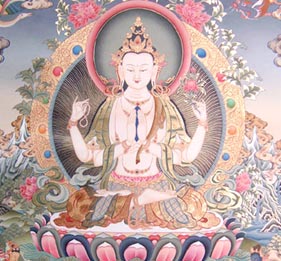
To find a way walking through life with a noble heart is not a matter of what cast, statues or creed your born in to. Its about the spirit with which you carry yourself. In your meeting with others youll find the best mirror for self reflection ever, to really come truly up close with the truth of how you are carrying yourself.
To love a thousands in your mind and stay in closed retreat for ever, is a good training, but it doesnt really serve the purpose as to carry out a noble heart in the world, when aiming to nurture and develop the noble heart of a Bodhisattva.
This nobel ideal is best known from the wise and profound Buddhist culture of ancient Tibet, and are set in to motion in our day and age through our every day meetings.
Through being present, through staying with what is and not turning back from what is uncomfortable, but staying open, this ideal can be met. At the same time its not about sticking it out in any circumstances, or swimming against the tide no matter what. Nor is it about wearing out our capacity of staying alive to its ruins.
Its about finding a way to stay noble and true to our awakening hearts, and have the courage to do so.
In the “Tiger Heart program” of the body & mind movement method CM -Conscious Movement TM that I once upon a time created and taught, we many times just remained with our raw sensation of wanting to shrink back from something that was stirred up by the movement. Through continuously moving on we found a time in space to see ourselves without getting stuck. Given the chance of this generous moment occurring, and use it, we had the opportunity to free ourselves from identification with some long lived and well nurtured habits.
Then through leaning in to the sorest spot of all, inch by inch, riding on the breath, until the pain didnt frighten us any more, we learned how others felt the same. And through the compassion that awakened from that experience we could let go of our own painful self fixation and find our selves in peaceful stillness.
To stand still in the midst of movement and listen to the hearts longing to be heard is something we can all train ourselves in, and a true gift to one and all. This entitles the courage of being true to one another in the midst of a stained world system created by our collective habitual fear born out of separation. To scream NO, enough is enough, when the worlds young people self immolate them selfs while we are buzzy looking for wrinkles in the mirror. That is what we need to do, as it is our own hearts that are burning.
We all want to be happy and we all have had the experience of fear, loss, pain and blame. We have all been each others mothers in this swirl of lifetimes up on lifetimes. Isnt it about time that we really recollected that?! I mean really. In the awakening heart there is no distinction between them and us. There is only the longing for everyone to be equally peacefully free. Truly free. Knowing that others want the same, we give birth to the aim to bring every one there, through the wisdom and compassion of the noble heart awakening.
Only respect and recognition of what is true can lead us there. Try at your work place or with your family and friends today and youll see. No one wants to have a back turned to them when theyre screaming in agony and pain. Or even just reaching out to connect for that matter. Nothing will solve our since beginningless time inhered worldly problems, unless we change our habits and stand up for each other with one voice saying; - Enough is enough.
Not one single generation more of these ignorant ways!
Its time to cultivate our noble hearts, and wake up to our inborn nature. And to carry this true nobility out in the world with respect for one another. To our selves, our beloved once, enemies and strangers. To all our, at least once in some lifetime, nurturing, carrying and loving Mothers, and re-pay each others kindness.
Our true selves, which are neither this nor that, but an abiding presence of a golden stream of wakefulness, effortlessly carrying itself out, spontaneously fulfilling wishes of love and joy. That is what we come to know ourselves to be inherently, when having the courage to carry out the noble heart.
Nothing more, nothing less.
Wednesday, September 12, 2012
Heartland of the Dakinis
Heartland of the Dakinis
 | ||||||||||||||
| Anapurna range. A completely different part of the Himalayas. | Just to confuse you. ;-) |
Early monsoon I made a pilgrimage in to the heartland of the Dakinis - Garsha Khandroling in Lahaul. Blessed with many holy places and incomparable shrines of worship I wandered from place to place. Basking in this wisdom I felt such grace, connecting with the core of these many thousand years old yogic pilgrim sites. Hidden in vast and hard to reach valleys in far away Himalayas.
Deep in to the mountains my heart was filled with an ocean of inspirational compassion, kneeling at the magical Avalokiteshvara/Shiva statue in Trilokinath, as well as marveling at the Dakinis footsteps in a potato field in Markula, a small town blessed with its many thousand years old holy temple dedicated to the Goddess Divine. I made it back just in time for the annual Lama dances in one of the many roof top monasteries of Keylong. Ema-ho!
I sat and sat some more at the holy mountain Drilbu Ri. Enjoying its splendor and magnificent views, pure water and core sacredness. With the chants, drums and trumpets resounding and echoing through out the valley my heart rejoiced a thousand times over all the wonders that has taken place, and that are still taking place at this, by seen and unseen forces, well protected area.
I thank the local Dakas and Dakinis for sharing theyre rich wealth and heritage with a simple wanderer from far away land like my self. Its humbeling to wake up and behold the majesty of the white dressed mountain tops at 4000 something meters and being able to breath and climb in her powerful presence.
I rejoice in the manifold flora and fauna so richly growing from seemingly no soil, and the water streams and falls providing each moment with a meditative roar and pour.
I thank the dragons for inviting and carrying for me on my journey. It was quite scary sometimes looking down at the 1000 meter shafts straight in to the bottom of the valley, while riding the vehicles to take me to and from, on the muddy mountain roads destined by landslides and potentially rolling stones at any moment.
I dont regret for a second going there, neither do I miss this holy Himalayan shrine. She lives in my heart now. For ever.
Saturday, May 19, 2012
New Moon in Dharamsala

Tuesday, September 13, 2011
Fleeting Moments
FLEETING MOMENTS (Rains retreat 2011)
Everything was leading up to this.
This moment, this house, the sound of the bird outside.
The rain keeps falling. Its as if I were surrounded by a constant wall of water.
Clothes, books, bags, all are damp and smells like old stovetop rags.
Even the rubber parts of the tea kettle are moulding.
The mist comes rolling in.
I wake up and forget to look with fresh eyes, thinking its the same old bookshelf standing there. Taking the colors of the rooms for granted. Even though I know that the colors are not out there, but they appear in my mind.
And if Im taking this moment for granted, no one is ever going to appreciate it.
It will be lost for ever.
Being bored is a luxury for the ignorant.
Even though I pretty much keep the same routine every day, all the days, hours and moments are different. If I were to make a hundred movies out of each and every one of my hundred days in retreat, they would all be unique. But who would ever watch them?
Those days are gone. Mind is viewing that which an instant ago was the present subjective moment, now turned in to an object. A memory. A concept.
Its a dead thing now.
Remembering certain things you did, said, experienced or how you reacted ten years ago will certainly not bring any transformation to this particular moment here right now. Unless you know the true nature of a memory.
Let go. Move on. Be done with it, and raise your vision to the end of the sky.
Then we can talk about skyflowers and rabbit horns.
And laugh about it.
I love you, she said. But who was she talking to?
The eyes of the beloved?
The nose?
The arms?
The heap of bones, flesh and blood all mixed up together with percieving feelings and holding on to concepts about who you are?
Hm. Maybe it was the name she was talking to.
Wanting the moment to last for ever.
Later wanting to push the memory away.
Now feeling neutral about the whole matter.
Percieving a stone as a stone as a stone.
Knowing it to be nothing separate from the cloud.
Life is a series of fleeting moments, seemingly interconnected with each other. We say we have a history, but each moment is actually fresh.
The hands typing this message, or what ever it is, are a day older then yesterday, they are not the same. Who ever I shock hands with seven or more years ago has actually never shocked this hand. Literally all the cells are renewed, its physically a totally other hand then back then. If we can even talk about a hand at all. Or even "back then".
Concepts.
So how do you know someone?
By theyre psycho-physical make up?
No, its proven to be constantly changing.
Its a river, and you can never step in to the same river twice.
So when body, thoughts and emotions are dealt with, what do we have left?
Consciousness it self? Mind as a continuum? An individual soul?
If it really exists as one permanent entity, then where does it reside?
Where did it come from? And where is it going?
Its impossible to find such a permanence in any phenomena.
A fainted taste of lies arises at the tip of my tongue. But where did it come from?
She does, he says, I loved her, I hated you. Mine, yours. Them. We.
Me, myself and I...who are you talking about?
From a truly inherently permanent self existing point of view,
theres actually no one here.//
Everything was leading up to this.
This moment, this house, the sound of the bird outside.
The rain keeps falling. Its as if I were surrounded by a constant wall of water.
Clothes, books, bags, all are damp and smells like old stovetop rags.
Even the rubber parts of the tea kettle are moulding.
The mist comes rolling in.
I wake up and forget to look with fresh eyes, thinking its the same old bookshelf standing there. Taking the colors of the rooms for granted. Even though I know that the colors are not out there, but they appear in my mind.
And if Im taking this moment for granted, no one is ever going to appreciate it.
It will be lost for ever.
Being bored is a luxury for the ignorant.
Even though I pretty much keep the same routine every day, all the days, hours and moments are different. If I were to make a hundred movies out of each and every one of my hundred days in retreat, they would all be unique. But who would ever watch them?
Those days are gone. Mind is viewing that which an instant ago was the present subjective moment, now turned in to an object. A memory. A concept.
Its a dead thing now.
Remembering certain things you did, said, experienced or how you reacted ten years ago will certainly not bring any transformation to this particular moment here right now. Unless you know the true nature of a memory.
Let go. Move on. Be done with it, and raise your vision to the end of the sky.
Then we can talk about skyflowers and rabbit horns.
And laugh about it.
I love you, she said. But who was she talking to?
The eyes of the beloved?
The nose?
The arms?
The heap of bones, flesh and blood all mixed up together with percieving feelings and holding on to concepts about who you are?
Hm. Maybe it was the name she was talking to.
Wanting the moment to last for ever.
Later wanting to push the memory away.
Now feeling neutral about the whole matter.
Percieving a stone as a stone as a stone.
Knowing it to be nothing separate from the cloud.
Life is a series of fleeting moments, seemingly interconnected with each other. We say we have a history, but each moment is actually fresh.
The hands typing this message, or what ever it is, are a day older then yesterday, they are not the same. Who ever I shock hands with seven or more years ago has actually never shocked this hand. Literally all the cells are renewed, its physically a totally other hand then back then. If we can even talk about a hand at all. Or even "back then".
Concepts.
So how do you know someone?
By theyre psycho-physical make up?
No, its proven to be constantly changing.
Its a river, and you can never step in to the same river twice.
So when body, thoughts and emotions are dealt with, what do we have left?
Consciousness it self? Mind as a continuum? An individual soul?
If it really exists as one permanent entity, then where does it reside?
Where did it come from? And where is it going?
Its impossible to find such a permanence in any phenomena.
A fainted taste of lies arises at the tip of my tongue. But where did it come from?
She does, he says, I loved her, I hated you. Mine, yours. Them. We.
Me, myself and I...who are you talking about?
From a truly inherently permanent self existing point of view,
theres actually no one here.//
Wednesday, June 1, 2011
A Stone is a stone is a stone...
14 April 2010 the one I was then was visiting a nunnery in India and shared some of my meditation experience with the nuns and laypeople there. Everyone was welcome - the only instruction before hand was: Bring a stone.
Heres some excerpts and lightly edited material from an article that later was published about this meditation event.
"- The first meditation will be a meditation on the stone that you brought. This practice is used in many different traditions. I initially learned it in the yogic tradition, as a means to practice one pointedness, concentration, called tatrak (meaning focusing in Sanskrit). This is a very good start for any meditation that you are practicing - to gather the mind
that many times are all over the place.
Keep your gaze on the stone in front of you...and as you watch the stone you might observe thoughts coming and going..just let them pass by like clouds in the sky. You keep your focus on the stone. And whenever you get hijacked by a thought just notice that that has happened, and then come back to focusing on the stone. Theres no particular WOW or interest in the different patterns, colors or shapes of the stone, or in any kind of mental fabrications such as light appearing, or what ever the mind is up to. Just come back to focusing on the stone, let everything else fall. What ever thoughts or feelings is there right now, tell your mind that right now the stone in front of you is all there is.
What ever comes up, just notice it and LET GO".
Heres some excerpts and lightly edited material from an article that later was published about this meditation event.
"- The first meditation will be a meditation on the stone that you brought. This practice is used in many different traditions. I initially learned it in the yogic tradition, as a means to practice one pointedness, concentration, called tatrak (meaning focusing in Sanskrit). This is a very good start for any meditation that you are practicing - to gather the mind

that many times are all over the place.
Keep your gaze on the stone in front of you...and as you watch the stone you might observe thoughts coming and going..just let them pass by like clouds in the sky. You keep your focus on the stone. And whenever you get hijacked by a thought just notice that that has happened, and then come back to focusing on the stone. Theres no particular WOW or interest in the different patterns, colors or shapes of the stone, or in any kind of mental fabrications such as light appearing, or what ever the mind is up to. Just come back to focusing on the stone, let everything else fall. What ever thoughts or feelings is there right now, tell your mind that right now the stone in front of you is all there is.
What ever comes up, just notice it and LET GO".
Friday, May 20, 2011
Taking Delight
Delight is naturally present in our lifes.
If we look at mundane things.
We like hearing songs, having belongings, being praised and so forth.
We experience delight in connection with the good things of this life.
In due to enjoy these things we do make an effort to get them.
So the energy to do that is coming from the enjoyment to do those things.
Taking delight .
We can just look at our own experience. Its a natural striving to get this.
To feel good about having this in our lifes.
The enjoyment of having worldly things.
Look at how worldly delight comes about. Study that and take a lesson from it.
How delight comes about in our lives in how were seeing them.
In this connection we can refer to what is called "the 8 worldly dharmas": Gain or Loss, Praise or Blame, Happiness or Pain, Victory or Defeat.
We like to get things. Losing it or not getting what we want - we dont like.
Chosing between happiness or suffering - we like happiness and we dont like pain.
Everybody thinks like this.
The dislike comes from seeing those four (4) negative ones as being wrong.
When were not having one of the four (4) we dont like - we like that. Its a form of worldly wealth, worldly abundance.
In addition to that, we like very much when we have the other nice four (4) ones.
There are situations when delight is produced - so we make effort to make these situations manifest.
So that great effort we make in order to get delight, is what we can call diligence!
The way Shantideva described diligence was to take delight in virtue.
Where as the efforts one makes in the 8 worldly things are lazyness.
All the effort to get these worldly things are lazyness.
Real diligence is taking delight in virtues activity.
When this lazyness occur its what is called attachment to lesser activitys. Of wish theres three kinds:
Attachment to...
0. Lesser activitys, or negative activitys.
0. Sheepish lazyness, not believing one can acomplish something. Sleepy, dull.
Where does that come from?!?
Taking delight in non-virtue comes from attachment to lesser activitys. And when one recognizes this attachment one can take delight in virtue. One doesnt know and are confused when being attached to lesser activitys, seduced and takes delight. If one knew that these are lesser activitys one wouldnt do it.
Its a mistake.
So recognizing this it has the opposite effect.
The 8 worldly dharmas and the acivitys we perform in adopting and rejecting there is something we see as positive, an advantage.
Beacuse we see things in a shortsited way. Not like theres another life coming.
Only this life alone.
Not taking in account that were going to die.
Or what will happen after we die.
Only totally zooming in on this life.
We see it like the best thing to do and to spend our lifes.
If this life where all, then the worldly way would be the best, cause there wouldnt be any karmic results.
Just get all the great things you can, makek sure nothing gets in the way of that enjoyment! Grab what you can.
But if we are able to extend our view we see that before we were born we already had a life, and after we die we will be born again.
And we see that there is a karmic effect occuring.
So the happiness and suffering we have in this life is not coming from the outer things we can get or not, but caused by our own previous actions.
Which then links up with conditions in this life, that we experience in a pleasant or non pleasant way.
So what we do now will be the cause of our future experience.
Choose wisely.
If we look at mundane things.
We like hearing songs, having belongings, being praised and so forth.
We experience delight in connection with the good things of this life.
In due to enjoy these things we do make an effort to get them.
So the energy to do that is coming from the enjoyment to do those things.
Taking delight .
We can just look at our own experience. Its a natural striving to get this.
To feel good about having this in our lifes.
The enjoyment of having worldly things.
Look at how worldly delight comes about. Study that and take a lesson from it.
How delight comes about in our lives in how were seeing them.
In this connection we can refer to what is called "the 8 worldly dharmas": Gain or Loss, Praise or Blame, Happiness or Pain, Victory or Defeat.
We like to get things. Losing it or not getting what we want - we dont like.
Chosing between happiness or suffering - we like happiness and we dont like pain.
Everybody thinks like this.
The dislike comes from seeing those four (4) negative ones as being wrong.
When were not having one of the four (4) we dont like - we like that. Its a form of worldly wealth, worldly abundance.
In addition to that, we like very much when we have the other nice four (4) ones.
There are situations when delight is produced - so we make effort to make these situations manifest.
So that great effort we make in order to get delight, is what we can call diligence!
The way Shantideva described diligence was to take delight in virtue.
Where as the efforts one makes in the 8 worldly things are lazyness.
All the effort to get these worldly things are lazyness.
Real diligence is taking delight in virtues activity.
When this lazyness occur its what is called attachment to lesser activitys. Of wish theres three kinds:
Attachment to...
0. Lesser activitys, or negative activitys.
0. Sheepish lazyness, not believing one can acomplish something. Sleepy, dull.
Where does that come from?!?
Taking delight in non-virtue comes from attachment to lesser activitys. And when one recognizes this attachment one can take delight in virtue. One doesnt know and are confused when being attached to lesser activitys, seduced and takes delight. If one knew that these are lesser activitys one wouldnt do it.
Its a mistake.
So recognizing this it has the opposite effect.
The 8 worldly dharmas and the acivitys we perform in adopting and rejecting there is something we see as positive, an advantage.
Beacuse we see things in a shortsited way. Not like theres another life coming.
Only this life alone.
Not taking in account that were going to die.
Or what will happen after we die.
Only totally zooming in on this life.
We see it like the best thing to do and to spend our lifes.
If this life where all, then the worldly way would be the best, cause there wouldnt be any karmic results.
Just get all the great things you can, makek sure nothing gets in the way of that enjoyment! Grab what you can.
But if we are able to extend our view we see that before we were born we already had a life, and after we die we will be born again.
And we see that there is a karmic effect occuring.
So the happiness and suffering we have in this life is not coming from the outer things we can get or not, but caused by our own previous actions.
Which then links up with conditions in this life, that we experience in a pleasant or non pleasant way.
So what we do now will be the cause of our future experience.
Choose wisely.
Thursday, November 4, 2010
We have a choice
Friday nights at the Vihara everyone is welcome for a Dharma talk and reflections. I was gracefully invited to give a talk and to share such an evening with the sangha here. You can find the talk I gave posted under "Sister Chimey Lhatso" - "We have a choice", through this link: http://www.saranaloka.org/audio/visiting-teachers.html
You will also find talks from other teachers there that might inspire you. Enjoy!
If you have any trouble finding this mp3 file or downloading it, please let me know.
Yours in the Dharma,
Chimey
You will also find talks from other teachers there that might inspire you. Enjoy!
If you have any trouble finding this mp3 file or downloading it, please let me know.
Yours in the Dharma,
Chimey
Monday, October 25, 2010
Last Week Past
Last week past.
Full moon waxing and waning.
Stay.
Be.
Walk at the beach. Ocean waves and misty sirens blending in early morning. Experiences of sisterhood by the ocean.
Went many miles to see you, the thread of actions is confirmed.
Here we are.
Sorrow building up for the ongoing divorce.
Seamless sangha born out of the unknown.
Full moon waxing and waning.
Stay.
Be.
Walk at the beach. Ocean waves and misty sirens blending in early morning. Experiences of sisterhood by the ocean.
Went many miles to see you, the thread of actions is confirmed.
Here we are.
Sorrow building up for the ongoing divorce.
Seamless sangha born out of the unknown.
Resting together in silence and sensually tasting the food
- without any blossoming red on our cheeks.
We are alive, we are free and theres a hell of a road ahead!
My Buddha!
Sense the fingertips yearning to touch and feel that parade of bones underneath the cold skin. She has past over to the other shore, the raft is broken, the beautiful vase is no more.
Standing in the midst of fire, burning flesh screaming ghosts.
No More! Will we take another slander.
No more will we walk the hall of fear.
We are one in breath and one out.
We are one in breath and one out.
Dying together giving birth to it all.
Maria can you hear me?
Mother of the victors we love you through rain and shine.
Peace, peace, peace.
Maria can you hear me?
Mother of the victors we love you through rain and shine.
Peace, peace, peace.
Friday, October 22, 2010
The Way of the Awakened One
Generosity, Patients, Moral, Joyous Effort, Concentration and Wisdom,
are all good virtues to accumulate.
Part of wisdom is realizing from the heart of knowing, that were all interdependent. What you choose to do and think in every moment of your life has a direct impact on your dearest ones as well as all other sentient beings. And its through this interdependence that we live our lives.
 Think of the floor that you are treading every day, someone took his or her time to put it together, just like the house you live in and the vehicle that transports you. Think of the school teachers that teach your children so that they can carry knowledge out in the world. The baker that baked the bread you were eating for breakfast. The list is endless. We are endless. In truth thats what we are. An infinite web of light.
And while we, as an infinite mass of light, remain here on this earth, in this precious human life, I think that we should really take care of the possibility given, to make the most out of our lives, what ever that means to each and every one of us. For the sake of everyone!
To me that means to follow my heart deeper in to the Dharma, and stay on the path. This is my choiceless choice. And choicelessnes has become my everyday life. Groundlessness my food and drink. Shedding layers of pride, arrogance, sorrow and pain, as I walk, sit, stand and lie down. Letting go of what I knew my self to be, entering the unknown in every moment.
This is the way of the Awakened One.
are all good virtues to accumulate.
Part of wisdom is realizing from the heart of knowing, that were all interdependent. What you choose to do and think in every moment of your life has a direct impact on your dearest ones as well as all other sentient beings. And its through this interdependence that we live our lives.
And while we, as an infinite mass of light, remain here on this earth, in this precious human life, I think that we should really take care of the possibility given, to make the most out of our lives, what ever that means to each and every one of us. For the sake of everyone!
To me that means to follow my heart deeper in to the Dharma, and stay on the path. This is my choiceless choice. And choicelessnes has become my everyday life. Groundlessness my food and drink. Shedding layers of pride, arrogance, sorrow and pain, as I walk, sit, stand and lie down. Letting go of what I knew my self to be, entering the unknown in every moment.
This is the way of the Awakened One.
Subscribe to:
Posts (Atom)